The situation across the Middle East isn't just "tense" anymore. It's volatile. If you're an American citizen currently living in or traveling through the region, you've likely seen the flurry of security alerts hitting your inbox. These aren't your standard, run-of-the-mill travel advisories that suggest you watch out for pickpockets in a tourist trap. We're talking about Level 4 "Do Not Travel" warnings and specific mandates for "ordered departure" of non-emergency personnel.
It's time to stop scrolling past these emails.
The U.S. State Department and various embassies have shifted their tone from cautious to urgent. This change reflects a specific, heightened risk of targeted violence, demonstrations that can turn violent in seconds, and the very real possibility of regional spillover from ongoing conflicts. If you think your local neighborhood in Amman, Doha, or Dubai is immune, you're miscalculating the speed at which geopolitical shifts manifest on the ground.
The reality of the current security posture
When the State Department issues a "Worldwide Caution," it's a broad brushstroke. But the recent targeted warnings for Lebanon, Iraq, and Yemen are different. They're surgical. For instance, the U.S. Embassy in Beirut didn't just suggest leaving; they practically begged people to take any available commercial flight while the airport was still operational.
History shows us that once the "Window of Opportunity" for commercial departure closes, the options left are often dangerous or nonexistent. Don't wait for the military to show up with a C-130. That’s a Hollywood trope that rarely plays out as smoothly as you’d hope in real life. Most evacuations are your responsibility.
Security experts point to a few specific triggers that have put Americans in the crosshairs. The combination of prolonged kinetic military operations and the digital wildfire of social media means a single event can ignite a protest outside an embassy in under an hour. We’ve seen this in Baghdad and outside the gates in Amman. If you're an American, your blue passport has become a symbol of policy that many in the region are currently lashing out against. It doesn’t matter if you’re a teacher, a contractor, or a digital nomad. To a mob, you’re a representative of the U.S. government.
What those Level 4 ratings actually mean for you
People often ignore the State Department’s numbering system. That’s a mistake.
- Level 3 (Reconsider Travel): This is a serious "maybe stay home" signal. It means there are specific, documented threats against foreigners or unstable local conditions.
- Level 4 (Do Not Travel): This is the highest level of caution. It means the U.S. government may have a very limited ability to help you if things go south. In places like Yemen or parts of Syria, if you get kidnapped or caught in a crossfire, there is no "911" for the embassy to call.
The current warnings emphasize that "emergency consular services" are not guaranteed. If the embassy is on "ordered departure" status, it means they’ve sent home the families and the non-essential staff. The skeleton crew remaining is there to shred documents and manage the most critical communications—not to help you find a lost suitcase or renew a passport that expired six months ago.
Why the threat feels different this time
I've talked to security contractors who have been in the region since the early 2000s. They all say the same thing. The "vibe" has shifted. In previous decades, there were clear lines. You knew which neighborhoods were safe and which weren't. Today, the anger is more decentralized.
The rise of "lone wolf" sentiments fueled by encrypted telegram channels makes it nearly impossible for local intelligence to track every threat. This is why the U.S. government is issuing broad warnings. They can't tell you "don't go to this specific cafe." Instead, they have to tell you "don't go to this entire country."
Take the recent alerts regarding civil unrest. In many Middle Eastern capitals, Friday is the day of protest. While many are peaceful, the presence of an American—even an accidental bystander—can escalate a situation. You become a "high-value target" for someone looking to make a point on camera. It’s not about you. It’s about what you represent.
Practical steps you must take today
If you're still in a high-risk area, stop being complacent. "I've lived here for five years and it's always been fine" is the most dangerous sentence in the English language.
First, enroll in STEP. The Smart Traveler Enrollment Program is the only way the local embassy knows you exist. If they need to send a mass notification about a closed border or a chartered flight, they use the STEP database. It’s free. It takes five minutes. Do it.
Second, check your documents. Is your passport valid for at least six months? Do you have your visa sorted? If you have dual citizenship, which passport are you using to enter and exit? In a crisis, having your paperwork in a "grab-and-go" bag is essential.
Third, have a "Go Bag." This isn't just for doomsday preppers. You need a small backpack with 72 hours of essentials.
- A power bank for your phone.
- Hard copies of your ID and emergency contacts.
- Local currency in cash (ATMs go down first during unrest).
- Necessary medications.
- A physical map (GPS can be jammed or disabled).
Managing your digital footprint
In 2026, your phone is your biggest security risk. If you're in a country where tensions are high, your social media posts can be tracked. Avoid posting your location in real-time. Don't share photos of protests or military equipment.
There have been cases where local authorities or even militia groups have scanned social media tags to identify Westerners in the area. Set your profiles to private. Better yet, stop posting until you’re in a safe-haven country.
The logistics of leaving
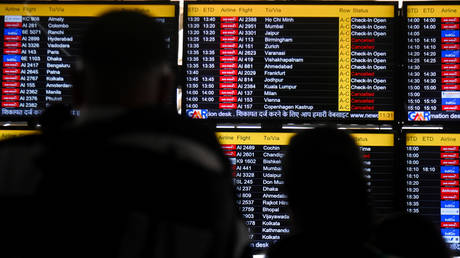
If you decide to leave, do it now. Airfares will only go up as the situation deteriorates. If the major carriers like Emirates, Qatar Airways, or Lufthansa start canceling flights to your city, that’s your final signal. Don't wait for the last flight out. Those seats are usually reserved for people with deep pockets or diplomatic ties.
Check your travel insurance policy. Most standard policies have "war and terrorism" exclusions. If you’re in a Level 4 country, your insurance might already be void. You need to look for specialized high-risk zone insurance if you're staying for work. These policies cover things like emergency political evacuation and "search and rescue" operations that your typical credit card insurance won't touch.
When the embassy tells you to leave, listen
The U.S. government is notoriously slow to move. They don't like issuing these warnings because it hurts diplomatic relations with the host country. If they’re willing to offend a local government by telling all Americans to get out, it means the intelligence they're seeing is terrifying.
They aren't trying to ruin your vacation or your business trip. They're trying to prevent a hostage situation or a casualty count that will lead to an even larger war.
Your next move is simple. Look at your local embassy’s website. Read the most recent "Security Alert." If it says "leave now," start booking your ticket. Don't consult your calendar. Don't wait for the next meeting. Your safety is worth more than any contract or "once-in-a-lifetime" travel experience. Get to a hub like Istanbul, Athens, or Dubai and wait for the dust to settle. It’s much easier to fly back in a month than it is to get out once the airspace is closed.
Ensure your family knows your itinerary. Keep your phone charged. Stay away from windows if you hear noise outside. Most importantly, trust your gut. If a situation feels wrong, it probably is.
Get your affairs in order. Grab your passport. Move toward safety while you still have the luxury of choice. Once that choice is taken away from you, the situation becomes a tragedy rather than an inconvenience.
Enroll in the STEP program immediately and book the next available commercial flight out if you are in a Level 4 zone.