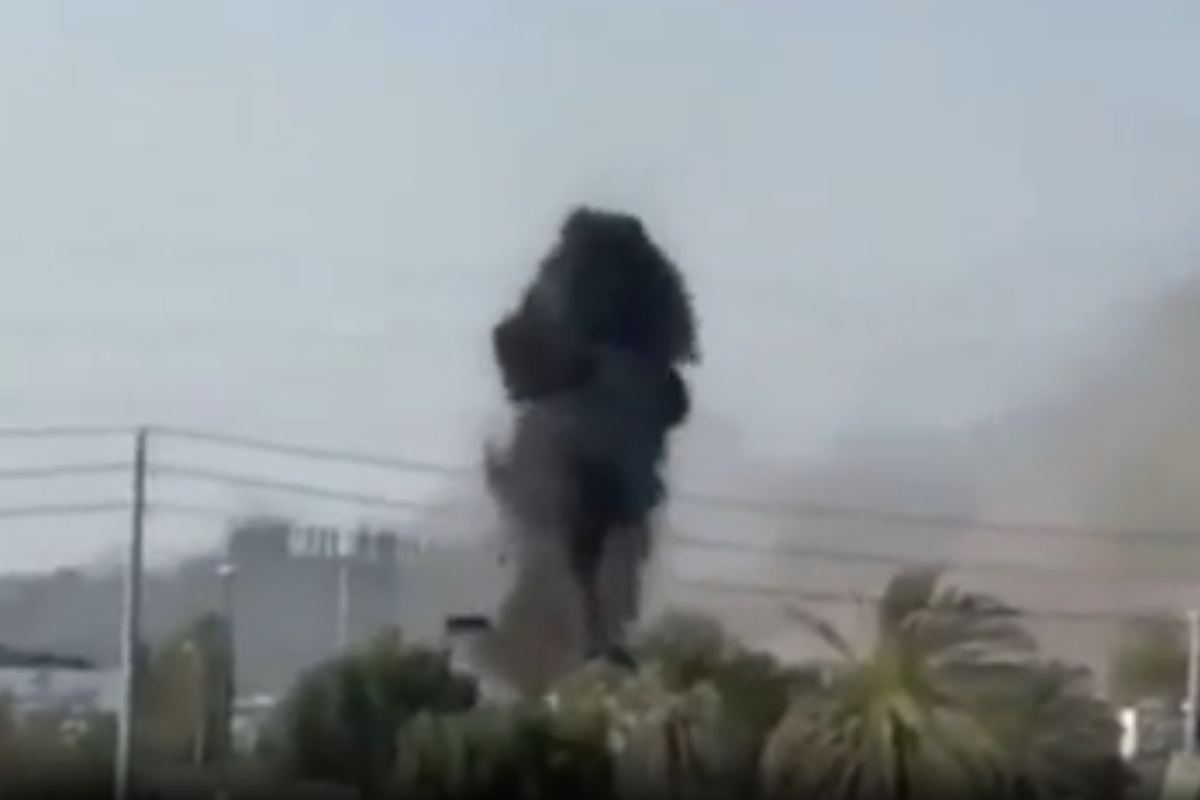
The myth of the "clean war" is officially dead. For decades, military tech companies sold us a dream of surgical strikes and smart bombs that would only hit the bad guys. But if you look at the recent conflicts in Gaza or Lebanon, the reality is the exact opposite. Artificial intelligence has turned the Middle East into a laboratory for high-speed slaughter. It hasn't made war more precise in a way that saves lives. Instead, it's created a digital assembly line for targets that moves faster than any human lawyer or commander can keep up with.
We're seeing a shift where algorithms like "Gospel" or "Lavender" decide who lives and who dies based on probabilistic patterns. It's not about a soldier seeing a gun; it's about a machine seeing a data point. When you automate the process of picking targets, you inevitably automate the process of making mistakes. The scary part isn't just the math—it's how these systems are used to provide a thin layer of "deniability" for actions that would otherwise be clear-cut violations of international law.
The Assembly Line of Death
In traditional warfare, a human intelligence officer spends days or weeks verifying a target. They look at drone feeds, listen to wiretaps, and confirm that a building actually contains a military asset. AI has shredded that timeline. Systems now used in modern Middle Eastern theaters can generate hundreds of targets in a single day.
Think about that for a second. There aren't enough human eyes in any military on earth to properly vet 200 targets in 24 hours. What happens instead is a "rubber stamp" culture. The AI says a house belongs to a militant because he was in a WhatsApp group with a suspected fighter. The human officer, overwhelmed by the sheer volume of data, spends maybe 20 seconds looking at the file before hitting "approve."
This creates a massive accountability gap. When a strike kills a dozen civilians, the military can point to the software and claim it was a technical error or a "statistical outlier." It’s a way to wash their hands of the blood. By moving the decision-making process into a "black box" algorithm, they make it nearly impossible for outside investigators to prove intent. If a machine made the mistake, who do you put on trial at the Hague?
Why the Middle East is the Testing Ground
The Middle East has always been the world’s favorite shooting range for new hardware. From the first Predator drones to Iron Dome, the region is where tech gets "battle-tested" before being sold to the rest of the world. AI is no different.
The density of urban environments like Gaza City or Beirut makes them the perfect—and most tragic—data sets for training neural networks. These algorithms thrive on "pattern of life" data. They track where people go, who they talk to, and what they buy. In an occupied or heavily surveilled territory, the data is everywhere.
I've talked to tech researchers who point out that these systems often rely on "guilt by association." If you’re a delivery driver who drops off food at a building where a militant lives, the AI might flag you. To the machine, you’re a "logistical node." To your family, you’re just a guy trying to earn a paycheck. The tech doesn't understand context. It only understands correlations.
The Disappearing Evidence Trail
You’d think more tech would mean more transparency. In theory, every drone strike and AI-generated target leaves a digital footprint. We should have more evidence of war crimes than ever before. But the opposite is happening.
Militaries are getting better at using "security" as a shield to hide the underlying logic of their AI. When human rights groups ask why a specific apartment block was leveled, the response is usually that the "target acquisition process is classified." They won’t show you the data that the AI used. They won’t show you the confidence score the algorithm assigned to that target.
This creates a "ghost" war. We see the explosions on social media, but the reasoning behind them is locked in a server room in Tel Aviv or an office in Virginia. It’s a deliberate strategy to make the fog of war thicker, not thinner. By the time an investigation starts, the data can be wiped, or the algorithm updated, making it impossible to reconstruct why a specific mistake happened.
The Problem with Probability in Combat
War is supposed to be governed by the principle of distinction—you must distinguish between combatants and civilians. AI, by its very nature, is a probabilistic tool. It doesn't "know" anything; it just guesses based on likelihoods.
Imagine an algorithm with a 90% accuracy rate. In the tech world, 90% is a miracle. It’s an A-grade. But in a war where you're generating 10,000 targets, a 90% accuracy rate means 1,000 "mistakes." Those mistakes are human beings.
We’re seeing a normalization of "acceptable" collateral damage that is calculated by the machine. Some reports indicate that certain AI systems are programmed to allow for a specific number of civilian deaths—say, 15 or 20—if the target is high-value enough. When a human commander does that, it’s a heavy moral weight. When a computer does it, it’s just an optimization problem.
Digital Occupation and the End of Privacy
It’s not just about the bombs. The AI-driven way of war includes total digital surveillance. In the Middle East, facial recognition cameras, phone tracking, and social media scraping create a permanent "digital cage."
This isn't just about catching "bad guys." It's about social control. If the AI can predict who might join a protest or who might be a future threat, the military can act before a crime is even committed. We are moving into the territory of "Minority Report," where people are targeted not for what they've done, but for what an algorithm thinks they might do.
This level of surveillance makes traditional war crimes easier to hide because the state has total control over the narrative. They own the data. They own the cameras. They own the sky. If you control the information, you control the truth.
How to Fight Back Against the Machine
The world is slowly waking up to the danger, but the law is light-years behind the tech. International treaties like the Geneva Convention were written for a world of bayonets and telegrams, not machine learning and autonomous drones.
If we want to stop the Middle East from becoming a permanent AI kill-zone, we need to change how we hold states accountable. Transparency isn't enough; we need "algorithmic accountability."
- Demand Source Code Disclosure: Any military using AI to pick targets must be required to turn over their logic and data sets to neutral international observers after a conflict. "Classified" can't be a blanket excuse for mass casualties.
- End the Rubber Stamp: International law needs to state clearly that a human "in the loop" who spends less than a certain amount of time reviewing an AI target is personally responsible for any resulting war crimes. You can't blame the tool if you didn't check the work.
- Ban Predictive Targeting: Targeting someone based on "patterns" or "likely future behavior" should be recognized as a war crime. You target actions, not probabilities.
- Follow the Money: Many of the companies building these AI tools are based in the US or Europe. Public pressure on these firms is often more effective than complaining to a military. If a company knows its "target generation" software will get them blacklisted from other government contracts, they might think twice about how it's built.
The tech isn't going away. It’s only going to get faster and more opaque. The only way to stop AI from making war crimes "untraceable" is to force the humans behind the machines back into the light. Don't let them hide behind the "black box." Demand to see the math.
To start taking action, you should support organizations like the Stop Killer Robots campaign or Amnesty International’s tech and human rights division. They are currently lobbying for new international frameworks that specifically address autonomous and AI-assisted weaponry. You can also write to your local representatives to demand that any export of "dual-use" AI surveillance tech to conflict zones be treated with the same severity as arms exports.


