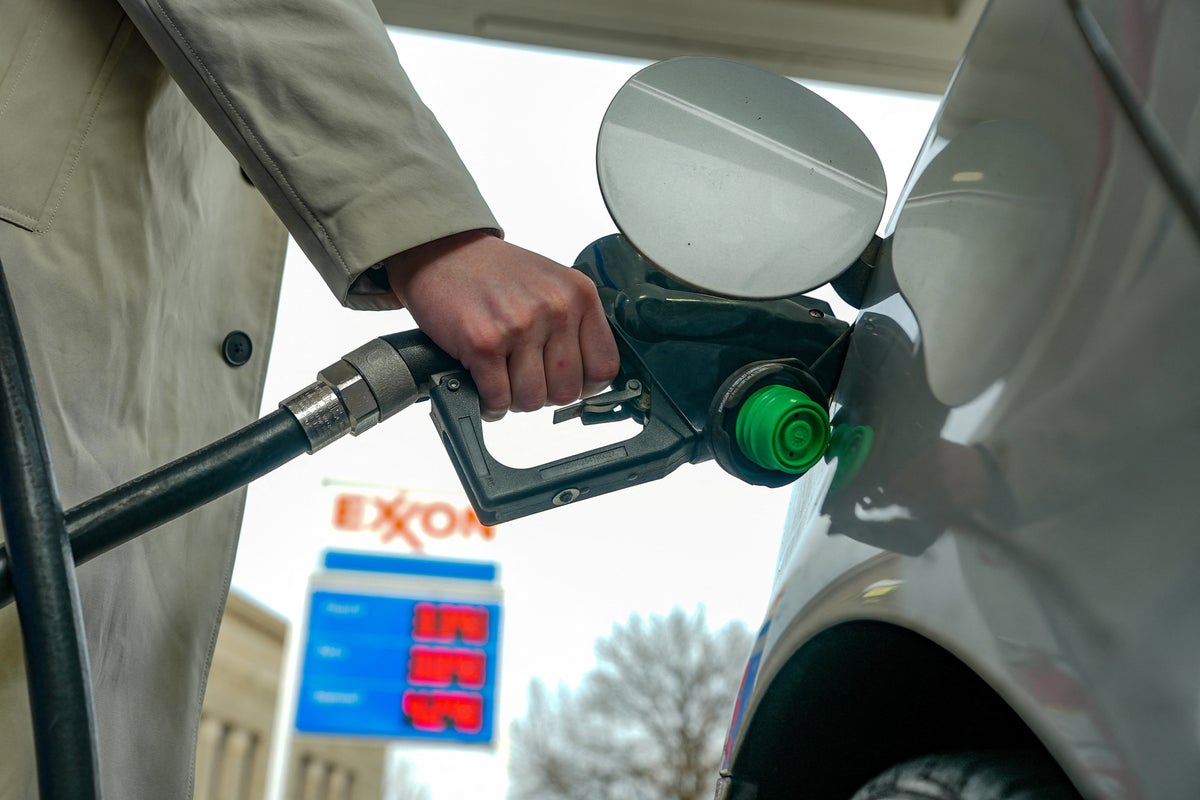
The headlines are screaming about a 17% jump in gasoline prices since the Iran attacks. They want you terrified. They want you glued to the ticker, watching every cent tick upward as if it’s a direct tax on your soul.
It isn't.
The "soaring" oil price narrative is a lazy, surface-level obsession that ignores the mechanics of how energy actually moves through a global economy. If you think the pump price is a simple reflection of Middle Eastern volatility, you are being sold a fairy tale. The reality is that we are witnessing a massive pricing inefficiency, and the real danger isn't that prices are too high—it’s that they are still too low to trigger the structural changes the West actually needs to survive the next decade.
The Myth of the Geopolitical Premium
Every time a drone flies over a refinery in the Middle East, "analysts" talk about the risk premium. They act as if every barrel of Brent or WTI is physically sitting in a tanker right next to the explosion.
I’ve spent years watching traders bake "fear" into the price of October futures while the physical supply for immediate delivery remains stagnant or even oversupplied. This 17% jump isn't a supply crisis; it’s a sentiment correction. We’ve spent two years lulled into a false sense of security by strategic reserve releases and high interest rates suppressing demand.
What we are seeing now is the market finally waking up to the fact that you cannot run a global economy on "just-in-time" energy when the "just-in-time" part involves shipping lanes that can be closed by a single asymmetrical actor with a $20,000 drone.
Why Gasoline Decouples from Crude
The competitor articles love to draw a straight line from a barrel of oil to your SUV’s gas tank. It’s a clean narrative. It’s also wrong.
Crude oil is a raw material. Gasoline is a manufactured product. The "crack spread"—the difference between the price of crude and the products refined from it—is where the real bloodletting happens. You can have $70 oil and $5 gasoline if your refinery capacity is choked, or if environmental regulations have made it impossible to maintain the aging infrastructure in PADD 1 (the East Coast).
When Iran attacks, the price of oil goes up because of speculation. But the price of gasoline goes up because American refiners are terrified of a supply chain rupture they can't fix. We haven't built a major new refinery in the U.S. with significant capacity since the 1970s. We are redlining a 50-year-old engine and acting shocked when it starts to smoke.
The Inflation Fallacy
The "People Also Ask" sections of the internet are currently obsessed with one question: "How much will gas prices drive inflation?"
They’re asking the wrong question. Gas prices don't drive inflation; they reveal it.
Inflation is an expansion of the money supply. When you print trillions, that value has to manifest somewhere. For a while, it was in tech stocks and crypto. Now, it’s rotating into hard assets. Energy is the ultimate hard asset. When gas prices "jump" 17%, it’s often just the dollar losing 17% of its purchasing power relative to the most important molecule on earth.
If you want to be mad at someone for the price of your commute, stop looking at Tehran. Look at the central banks that treated "cheap energy" as a permanent natural right while debasing the currency used to buy it.
The Counter-Intuitive Truth: We Need Higher Prices
Here is the take that will get me kicked out of the room: We need $150 oil.
We have spent twenty years subsidizing a lifestyle that assumes energy is essentially free. This has led to massive capital misallocation. We build sprawling suburbs that require a two-hour round-trip commute. We build supply chains that require shipping a plastic toy three times across the Pacific before it hits a shelf.
Low energy prices are a sedative. They make us slow. They make us vulnerable.
High prices, while painful in the short term, are the only thing that forces "energy density" back into the conversation. It forces companies to stop pretending that "ESG" goals are just PR and starts making them a matter of logistical survival. High prices drive the innovation that actually matters—not just "cleaner" energy, but more efficient use of the energy we already have.
The Strategic Petroleum Reserve Blunder
Imagine a scenario where you have a fire extinguisher in your kitchen. You don't use it to put out a candle because you’re worried about the cost of the wax. You save it for when the curtains are on fire.
The U.S. government has been using the Strategic Petroleum Reserve (SPR) to put out candles. They’ve drained our emergency stash to "manage" the political optics of gas prices during election cycles.
By the time the Iran situation actually escalates into a full-scale blockade of the Strait of Hormuz—where 20% of the world's oil flows—the extinguisher will be half-empty. This is the definition of short-term thinking. It creates a "moral hazard" for the consumer, who continues to drive a 12-mpg truck because the government is artificially suppressing the cost of his bad decisions.
Reframing the "Crisis"
The current 17% hike isn't a crisis. It’s a signal.
A real crisis is what happens when the physical flow stops entirely. Right now, the flow hasn't stopped. The tankers are still moving. The insurance rates are just higher.
If you are an investor or a business owner, you shouldn't be hedging against "high gas prices." You should be hedging against the total obsolescence of any business model that requires cheap, stable energy to function.
- Stop looking at the pump. Look at the shipping insurance premiums in the Red Sea.
- Stop looking at Iran. Look at the refinery utilization rates in the Gulf Coast.
- Stop complaining about 17%. Prepare for 100%.
The Geopolitical Reality Nobody Wants to Hear
Iran knows exactly what they are doing. They don't need to win a war. They just need to make the cost of Western "normality" too high to maintain.
The Western world is addicted to a specific price point for energy. Iran is holding the needle. Every time they twitch, we go into withdrawal. The only way to win that game is to break the addiction, and you don't break an addiction by asking the dealer for a discount.
We are entering an era of "Energy Realism." In this era, the price of a gallon of gas will no longer be determined by what is "fair" or "affordable." It will be determined by the cold, hard physics of moving a flammable liquid through a hostile world.
If you are waiting for prices to "return to normal," you are waiting for a world that no longer exists. The 17% jump isn't a spike. It’s the new floor.
Build your life and your business around that reality, or get crushed by the next 17%.
The era of cheap, consequence-free movement is over. Stop crying about the price of the ticket and start wondering if the train is even coming.