The air in Kyiv has a specific weight. It isn't just the humidity or the scent of chestnuts in the spring; it is the physical pressure of a million simultaneous "what-ifs" hanging over the Dnipro River. When the sirens wail, the sound doesn't just vibrate in your ears. It rattles the loose change in your pocket and makes you wonder if that currency will be worth the metal it’s minted on by Tuesday.
In the glass-walled offices where numbers are crunched and futures are negotiated, the atmosphere is equally heavy, though the stakes are measured in spreadsheets rather than shrapnel.
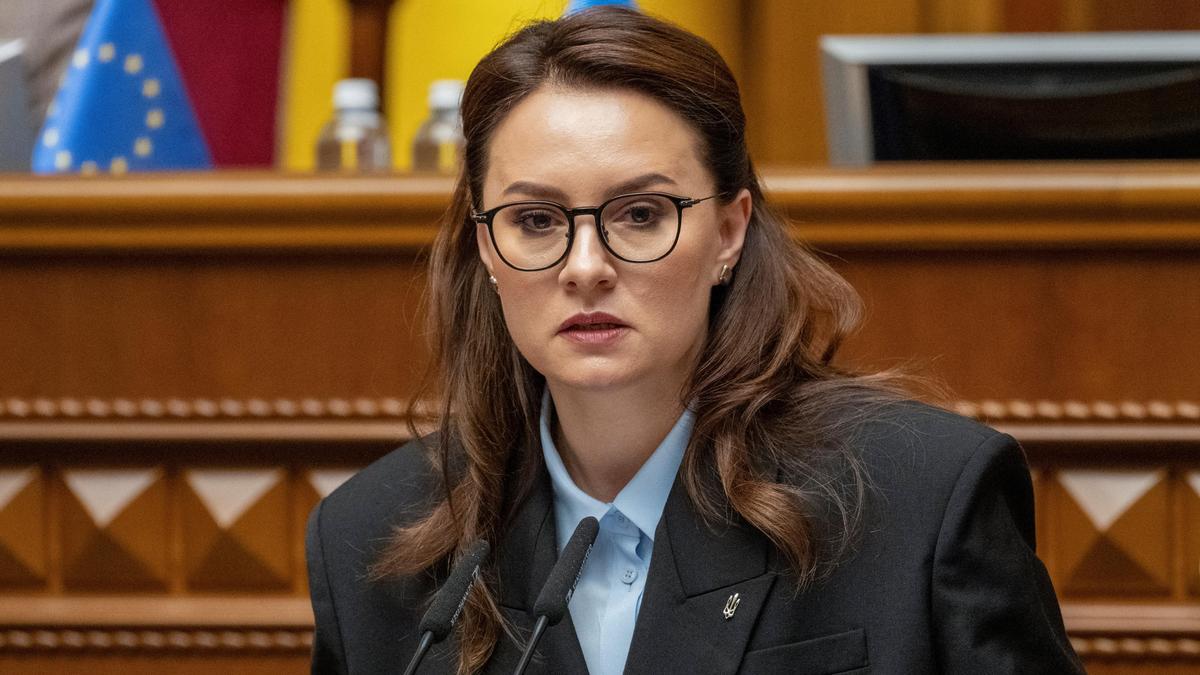
Ukraine’s First Deputy Prime Minister, Yulia Svyrydenko, recently confirmed a movement of digits that most of us can barely conceptualize. $1.5 billion. It arrived as the first tranche of a broader support program from the International Monetary Fund. To a casual observer in London or New York, it is a headline to be scrolled past. To a mother in Kharkiv trying to buy medicine or a small business owner in Lviv keeping the lights on, it is a heartbeat.
Economics is often taught as a cold science of curves and equilibrium. In a nation under fire, economics is actually the study of survival.
The Invisible Foundation
Imagine a bridge. Not a bridge of steel and concrete, but one of trust and liquidity. Every day, millions of Ukrainians walk across this metaphorical bridge. They pay for bread. They receive pensions. They fund the repair of power grids that were shattered the night before.
But a bridge needs pylons.
The IMF’s $1.5 billion represents one of those massive, underwater supports. It isn't money meant for luxury or expansion. It is "Direct Budgetary Support." This is the fuel for the engine of a state that refuses to stall. Without these tranches, the bridge starts to sway. The currency, the hryvnia, begins to lose its grip. When a currency fails, the social contract often follows it into the abyss.
Consider a hypothetical citizen we’ll call Olena. She runs a small bakery. Her flour costs have tripled because of logistics and risk. Her electricity is a gamble. If the government cannot stabilize the economy, the price of her loaf of bread might double between the time she kneads the dough and the time she pulls it from the oven.
Hyperinflation is a monster that eats hope. The IMF funds act as a cage for that monster. By injecting this liquidity, the Ukrainian government can maintain a semblance of price stability. It means Olena knows what her bread will cost tomorrow. It means the retired teacher down the street knows her pension will actually buy a bag of groceries.
The Price of Accountability
Money from the IMF never comes as a gift. It is a partnership, often a grueling one. To receive these funds, Ukraine must demonstrate "structural benchmarks."
This is where the narrative shifts from simple survival to a profound transformation. The world is watching to see if a country can fight a war and reform its soul at the same time. The requirements aren't just about math; they are about transparency. They are about ensuring that the old ghosts of corruption remain buried.
Svyrydenko and her team aren't just counting dollars. They are navigating a labyrinth of policy changes. They are proving to the global community that Ukraine is a safe bet—not just a moral one, but a financial one. This involves tightening tax codes, auditing state spending, and ensuring the central bank remains an independent fortress.
It is a double-front war. On one side, the physical defense of territory. On the other, the intellectual and political defense of a modern, European economy. One requires tanks; the other requires a relentless commitment to the rule of law.
The Ripple Effect of a Single Tranche
What does $1.5 billion actually do when it hits the ground?
It doesn't just sit in a vault. It flows through the veins of the country. It allows the Ministry of Finance to meet its obligations without printing money. Printing money is the desperate act of a collapsing state; it leads to a death spiral where paper becomes worth less than the ink used to mark it.
By using IMF funds, Ukraine avoids this trap.
The money supports the "macro-financial stability" that sounds so boring in a textbook but feels so vital on the street. It allows for the repair of a hospital in Chernihiv. It ensures that the firefighters who rush toward a burning building are actually paid for their bravery. It provides a cushion so that when the next shock comes—and it will—the impact is absorbed by the treasury rather than the individual.
Think of it as a blood transfusion for a patient who is currently running a marathon. The patient is strong, and their will is unbreakable, but the body has limits. The IMF is the IV drip that keeps the blood pressure steady while the runner keeps their eyes on the finish line.
The Logic of the Long Game
There is a cynicism that often creeps into discussions about international aid. Critics ask: Where does it go? Why should we care?
The answer lies in the connectivity of our modern world. If the Ukrainian economy collapses, the resulting vacuum doesn't stay within its borders. It creates a refugee crisis of unimaginable proportions. It shatters the grain markets that feed North Africa and the Middle East. It sends a signal to every aggressor that a country's spirit can be broken if you simply wait for their bank account to hit zero.
Investing in Ukraine’s stability is an act of global self-interest.
The $1.5 billion is a signal to private investors, too. It says that the gatekeepers of the global financial system believe in Ukraine’s trajectory. It acts as a green light for the rebuilding phase that is already beginning in the shadows of the conflict.
When Svyrydenko announces a tranche, she isn't just reading a press release. She is announcing that the world's financial architecture is still plugged into Kyiv.
The Weight of the Signature
Behind every one of these agreements are exhausted people in dimly lit rooms. There are economists who haven't slept in thirty-six hours, debating the nuances of a VAT policy while the windows rattle from distant impacts.
There is a specific kind of courage in being a bureaucrat in a time of catastrophe. It is the courage of the mundane. It is the refusal to let the systems of civilization crumble.
When the news cycle moves on to the next scandal or the next celebrity wedding, the work of maintaining a nation’s solvency continues in silence. These tranches are the milestones of that quiet persistence. They are proof that the machinery of statehood is still humming, still processing, and still planning for a future that many thought would never come.
The stakes are invisible until they are gone. We don't notice the stability of our currency until we can't buy a coffee. We don't notice the strength of our banks until the ATM screen goes dark.
Ukraine is fighting to ensure those screens stay lit.
The $1.5 billion is more than a loan. It is a testament to a truth that is often forgotten in the noise of battle: a nation is more than its borders. A nation is a collective promise to look after one another’s welfare. It is a system of mutual support, backed by the belief that tomorrow will be better than today.
As the sun sets over the golden domes of Kyiv, the numbers on the central bank’s ledger shift. The pulse of the country steadies. Somewhere in a small apartment, a light stays on, a stove is lit, and a mother tells her child that things will be okay.
The math of the IMF and the reality of the human heart have, for a moment, found a common language.